AI Voice Work: How Women Are Earning $2,000-$6,000 a Month Narrating Audiobooks, Ads, and Explainers
Voice work used to mean a soundproof booth and ten-hour sessions. AI cut the production time by 80% - here's how women are turning that into $2,000-$6,000 a month.
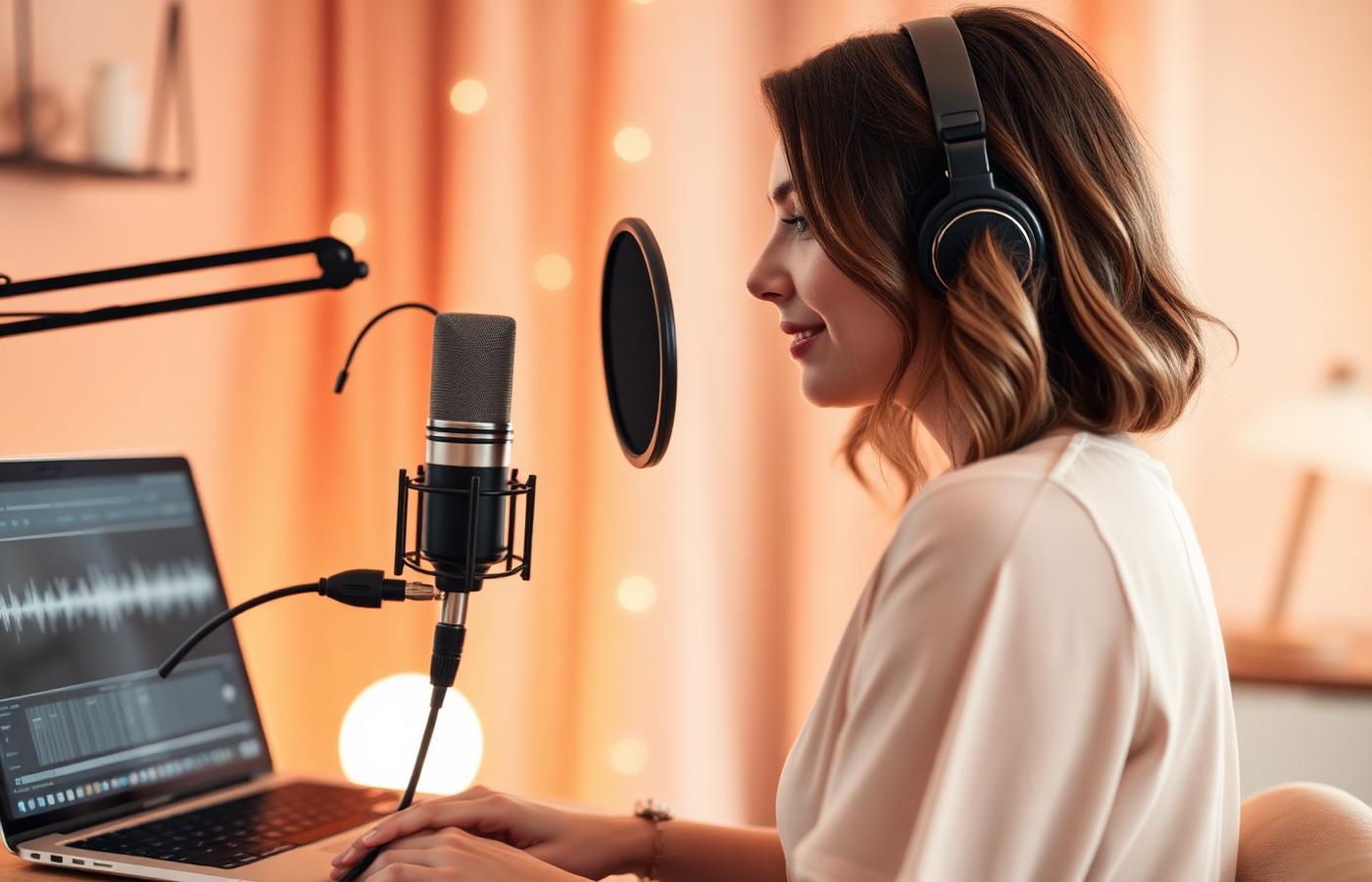
Audio is the quietest gold rush in the creator economy. Publishers need audiobooks, brands need ad reads, course creators need narration, apps need onboarding voices - and almost none of them have the budget for a traditional studio day. AI voice tools closed that gap, and the women who learned them first are quoting $2,000 to $6,000 a month for work that fits between school runs.
This is not the "let a robot read it" business. The money is in directed audio: your judgment, your ear, your quality control, with AI doing the tedious 80% - noise removal, retakes, pacing, mastering, and multi-language versions.
Key Takeaways
- AI editing cuts audiobook production from roughly 6 hours per finished hour to under 2.
- Three paid lanes: audiobook narration, brand and ad voiceover, and explainer/e-learning narration.
- Realistic entry rates: $150-$300 per finished audio hour, $250-$800 per commercial spot.
- Your own cloned voice is an asset - it lets you deliver revisions in minutes instead of re-recording.
- Disclosure matters: many platforms and clients require you to state when audio is AI-assisted.
Why 2026 Is the Window
Audiobook demand keeps outrunning supply. The Audio Publishers Association has reported more than a decade of consecutive revenue growth, and independent authors publishing through Audible and other retailers now make up a large share of new titles. Those authors cannot pay $400 per finished hour to a union narrator. They can pay $200 - and with AI-assisted workflow, $200 an hour of finished audio is a genuinely good rate.
Meanwhile the same skill transfers sideways. Every business that publishes short video needs voice: the UGC creators charging per video outsource voiceovers constantly, and so do faceless channel operators who never want to be heard on camera.
The Three Lanes (and What Each Pays)
1. Audiobook narration and production
You record, AI cleans and paces, you master and deliver. Independent authors are the volume market. Entry rate is $150-$250 per finished hour (PFH); once you have five titles and reviews, $300+ PFH and royalty-share deals become realistic. A 60,000-word book is roughly 6-7 finished hours, so a single title pays $1,000-$2,000 and takes about two working weeks in an AI-assisted workflow.
2. Commercial and social ad voiceover
Shorter, faster, better paid per minute. A 30-second social spot runs $250-$800 depending on usage rights. Agencies love narrators who can turn around three tonal variations in an hour - trivial with a cloned voice, painful without one.
3. E-learning, explainer, and IVR narration
The least glamorous and the most repeatable. Corporate training modules, app onboarding, phone systems. Rates run $100-$250 per finished audio hour but the scripts are simple and clients renew quarterly. This lane pairs beautifully with the automation agency model, because the same clients who need workflows fixed also need their SOPs narrated.
Your Stack: Five Tools, About $80 a Month
- Voice generation and cloning: ElevenLabs for cloned and synthetic voices with fine emotional control.
- Recording and editing: Descript - edit audio by editing the transcript, which is the single biggest time saver in this business.
- Free professional DAW: Audacity for final mastering and ACX-spec checks.
- Script prep: any capable chat model to mark pronunciation, breath points, and emphasis before you record.
- Delivery: a simple client folder system with versioned WAV and MP3 exports.
If you are still choosing your core subscriptions, our guide to the best AI tools for women entrepreneurs covers what is worth paying for and what is not.
The Quality Bar Nobody Tells Beginners About
Retailers reject audio for technical reasons far more often than artistic ones. Audible's ACX submission standard requires each file to measure between -23dB and -18dB RMS, peak no higher than -3dB, and have a noise floor below -60dB. Learn those three numbers and you will pass on first submission while competitors resubmit three times.
Practical fixes that cost nothing: record in a closet with clothes on both sides, keep the mic four inches off-axis from your mouth, turn off the fridge circuit if you can hear it, and never record within an hour of dairy.
How to Clone Your Own Voice (And Why You Should)
Thirty minutes of clean reading is enough to build a high-fidelity clone of your own voice. That clone becomes an asset: when a client wants "line 42 changed to say Tuesday instead of Thursday," you type it instead of setting up the mic again. Revisions that used to eat an evening take ninety seconds.
Two rules. First, only ever clone your own voice or a voice you have written permission to use - the FTC has been explicit about deceptive voice impersonation, and several U.S. states now have specific likeness statutes. Second, tell clients what is human-recorded and what is synthesized. Most do not mind. All of them mind finding out later.
Finding Clients in the First 30 Days
Week 1: Build a 90-second demo reel
Three clips: a warm narrative passage, a bright commercial read, and a neutral corporate explainer. Twenty to thirty seconds each. This single file is your entire portfolio for the first six months.
Week 2: Post where authors already are
ACX's marketplace, Reddit's self-publishing communities, and indie author Facebook groups. Do not pitch cold - answer three questions about audio quality for every one time you mention that you narrate.
Week 3: Pitch ten businesses directly
Local course creators, agencies, and app studios. The pitch is one paragraph: what you heard on their current audio, what you would change, your rate, your reel link.
Week 4: Convert one client into a retainer
"I'll do all your episode intros and ad reads for $600 a month" is easier to say yes to than another per-project quote. Retainers are what turn this from a hustle into income you can plan around. The same logic drives the coaching program model.
Pricing Without Undercharging
| Service | Beginner | Established |
|---|---|---|
| Audiobook (per finished hour) | $150 | $300-$450 |
| 30-second social ad | $250 | $600-$800 |
| E-learning module (per hour) | $100 | $250 |
| Monthly podcast retainer | $400 | $1,200 |
Quote per finished audio, never per hour worked. As your AI workflow gets faster, hourly pricing punishes you for being good.
What a $4,000 Month Actually Looks Like
One audiobook title at 7 finished hours and $200 PFH: $1,400. Two podcast retainers: $1,000. Four ad spots: $1,600. That is roughly 60-70 working hours across the month - part-time, from a closet, with a $80 tool stack. It is not passive, but it stacks predictably, and the skills compound in a way that pairs well with genuinely passive AI income streams.
Frequently Asked Questions
Do I need an expensive microphone?
A $100 large-diaphragm USB condenser in a treated closet outperforms a $600 mic in an untreated room. Room first, mic second.
Will AI voices replace narrators entirely?
They already replaced the cheapest tier. What survives and grows is directed, quality-controlled audio with a human accountable for it - which is exactly the job described here.
Do I need to disclose AI use?
Yes. Retailers increasingly require an AI-narration flag, and clients deserve to know. Disclosure has not hurt rates for people who deliver good audio.
What accent or voice sells best?
Clarity beats accent. Consistent pacing and clean plosive control get rebooked; a "perfect" voice with uneven levels does not.
How long until my first paid job?
Two to six weeks if you actually publish the demo reel and pitch ten people a week. Most people stall at the reel.
The Bottom Line
Voice work rewards the exact things women are routinely told are soft skills: tone, pacing, empathy for a listener. AI just removed the part that required a studio and a decade of Pro Tools. Record the reel this week.
Build on it: turn your narration into digital products, feed clips into a faceless channel, and grow the whole thing into a six-figure AI business.
Loved this article?
Share it with a friend who's ready to build wealth with AI — or subscribe for daily trending topics.
You might also like
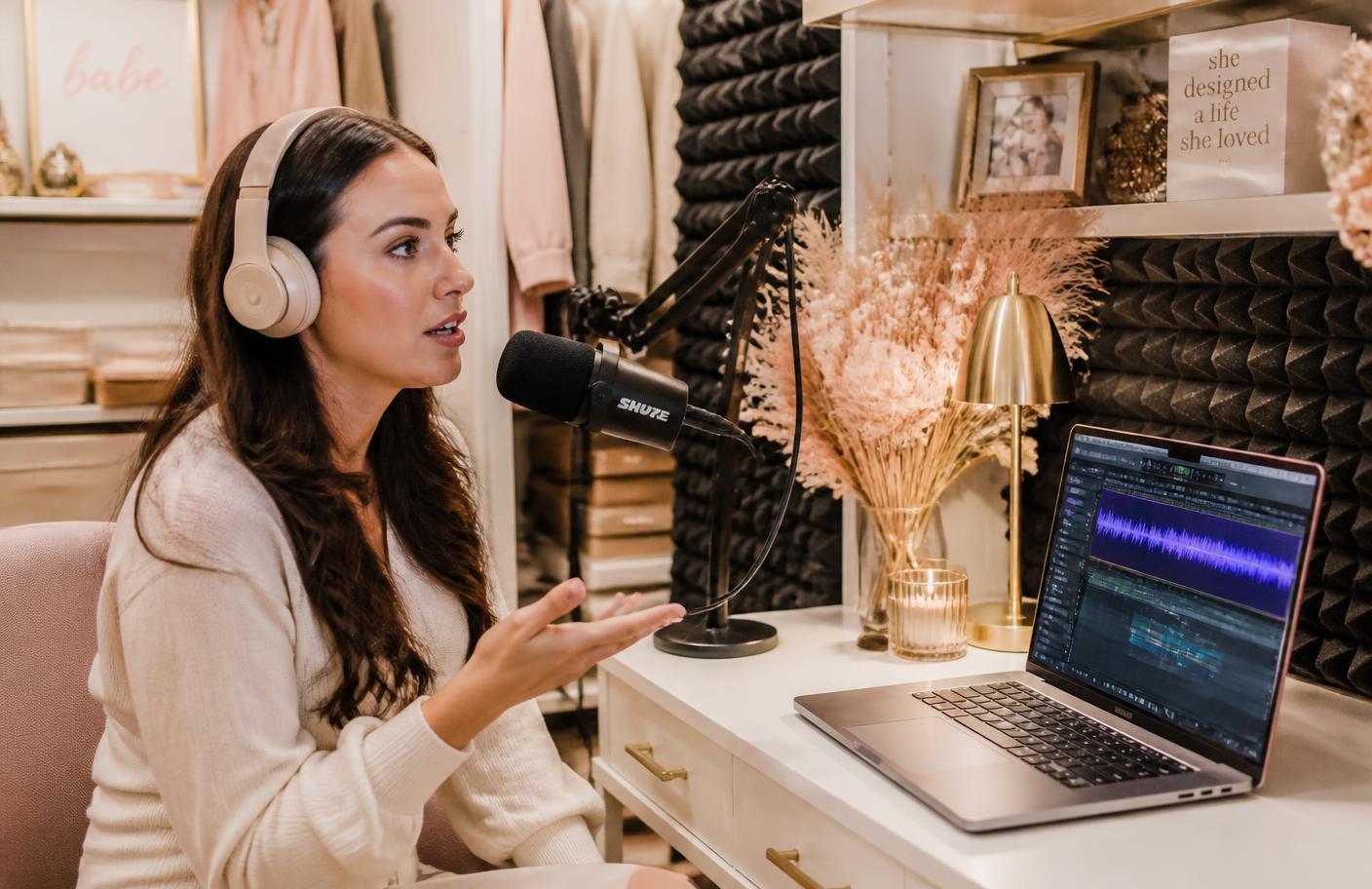
AI Podcasting for Women: How to Launch, Edit, and Monetize a Show in 90 Days Without a Studio
Launch and monetize a podcast in 90 days using AI editing, voice tools, and smart distribution - no studio or audio engineering degree required.
Building an AI-Powered Personal Brand on LinkedIn: How Women Turn 30 Minutes a Day Into Inbound Clients
You do not need to go viral. You need forty of the right people to recognise your name. Here is the AI-assisted system that gets you there.
AI UGC Creator: How Women Are Charging $300–$1,500 Per Video Brands Never See Them Film
Brands need thousands of authentic videos a month and can't make them fast enough. AI closed the skill gap — here's the exact workflow, pricing, and pitch.